Asseco Resovia Rzeszów
Why is Resovia significant beyond its own trophy record?
Because the club helps explain the broader Polish model. PlusLiga has earned respect as a competition where many matches are demanding, travel and preparation matter, and teams cannot coast on reputation. Within that landscape, Resovia has often been read not only as an individual club but as part of a national volleyball culture that expects serious standards. That expectation changes how players are judged and how clubs are built.
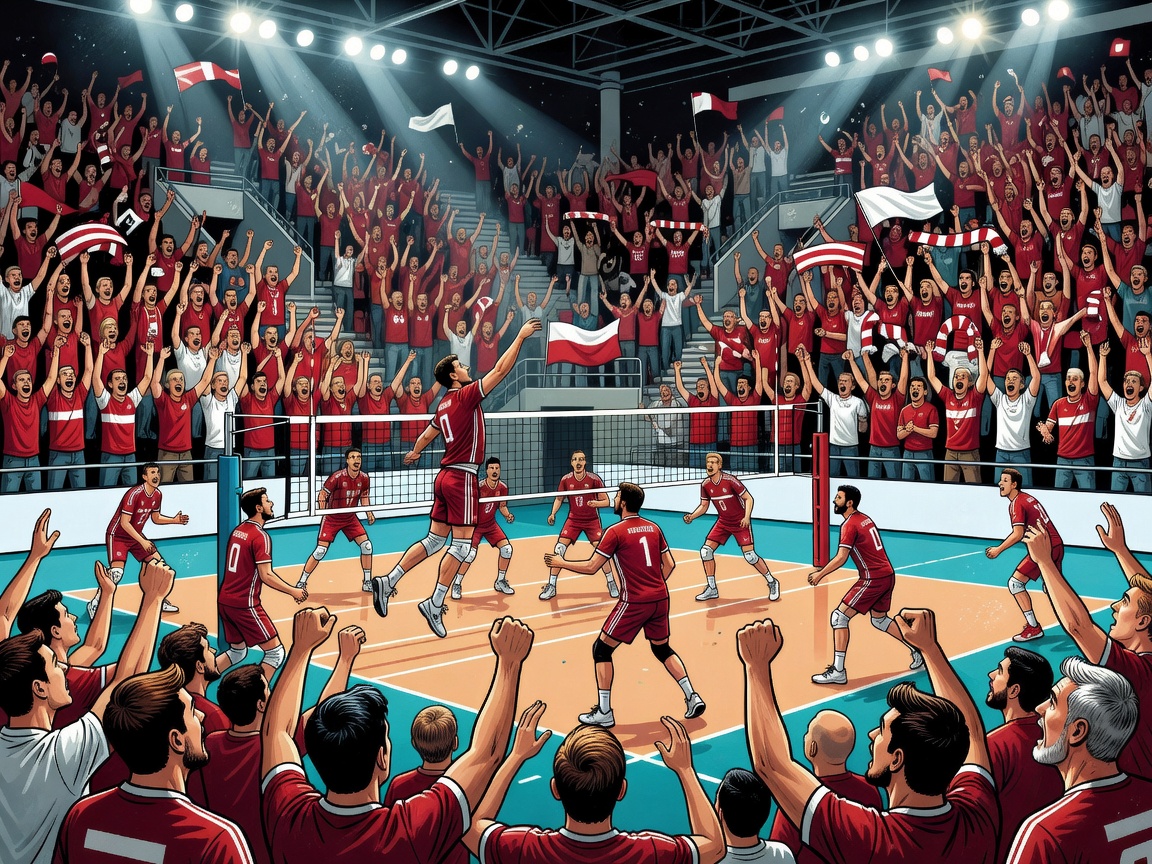
Resovia is also significant because it sits at the meeting point of local identity and continental ambition. European club volleyball is full of teams trying to look grand. Fewer manage to feel rooted as well. In Poland, crowd culture is not decoration. It can shape pressure, rhythm and the sense that every home fixture carries consequence. Resovia benefits from that context, but it is also tested by it. Support never cancels scrutiny.
What does the PlusLiga environment tell us about the club?
It tells us that durability matters. A team that survives well in Poland usually has to solve many kinds of problems: loud halls, tactical variation, awkward travel and opponents that do not hand away clean first contact. That means depth is useful, but balance is even more useful. A side built only for spectacular attacking phases may look impressive one week and exposed the next.
For Resovia, this makes weekly volleyball a serious indicator of quality. It is not simply about whether the club wins a headline tie. It is about whether the team can hold side-out under noise, score in transition when the match gets ragged and sustain concentration through long domestic stretches. Clubs from very demanding leagues often take those habits into Europe with them, and that is one reason Polish representatives are rarely easy draws.
What kind of identity is commonly associated with Resovia?
The identity is usually read through resilience and crowd-backed intensity rather than through one exaggerated technical stereotype. That can be a strength. Teams that are known only for a huge serve or only for a dominant opposite become easier to frame. Resovia tends to be discussed more as a complete competitive setting: difficult hall, demanding domestic context, emotionally engaged support and a squad expected to withstand pressure rather than merely create highlights.
This does not mean style is irrelevant. Like any top club, Resovia still needs quality in reception, setting and terminal attack. The point is that the club's reputation often rests on how those parts behave together under strain. In that sense, its identity feels closer to league-proven toughness than to an all-or-nothing burst model.
How should supporters and atmosphere be weighed in analysis?
Seriously, but not lazily. Loud halls can alter timing, communication and service rhythm. A serving run feels heavier when the building is on top of the rally. Opponents can rush between points or lose a little calm after a block touch turns into another chance. Those are real effects. But atmosphere only becomes analytically useful when linked to the technical layer. Is the home team serving well enough to activate the crowd? Is the block reading clearly enough to turn noise into momentum?
Resovia is a good example because the supporter story is obvious, yet the volleyball story underneath it remains the decisive one. A strong hall is not a substitute for controlled first contact or for making sound choices at the end of sets. Instead, it is an amplifier. When the team is organised, the hall can push a good spell into a decisive one.
What separates Resovia from some other famous European clubs?
Some clubs are discussed mostly through European titles. Some are discussed through budget, star recruitment or periods of dominance. Resovia is often more interesting as a pressure case. What does a serious Polish club look like when it tries to stay relevant domestically and continentally at once? How much energy does the league take out of a squad, and how much does it sharpen the squad for later tests?
Those questions make direct comparison with Italian or Turkish sides revealing. A club from Poland may arrive in Europe with fewer glamorous assumptions around it, but with a hard competitive edge earned in league play. That edge does not guarantee superiority. It does explain why these teams are often difficult to knock out.
How should a reader place Resovia among Europe's top volleyball clubs?
Place the club among the sides that embody the value of league hardness, supporter intensity and structural resilience. It may not always be the first name used in casual conversation, but serious readers should resist that shortcut. European standing is not only built by headline glamour. It is also built by repeat exposure to difficult volleyball and by learning how to function when sets become tense and untidy.
Asseco Resovia Rzeszów matters because it represents a highly credible route to elite status: not the easiest road, not the flashiest one, but one shaped by a league and a culture that demand substance every week.