Trentino Volley
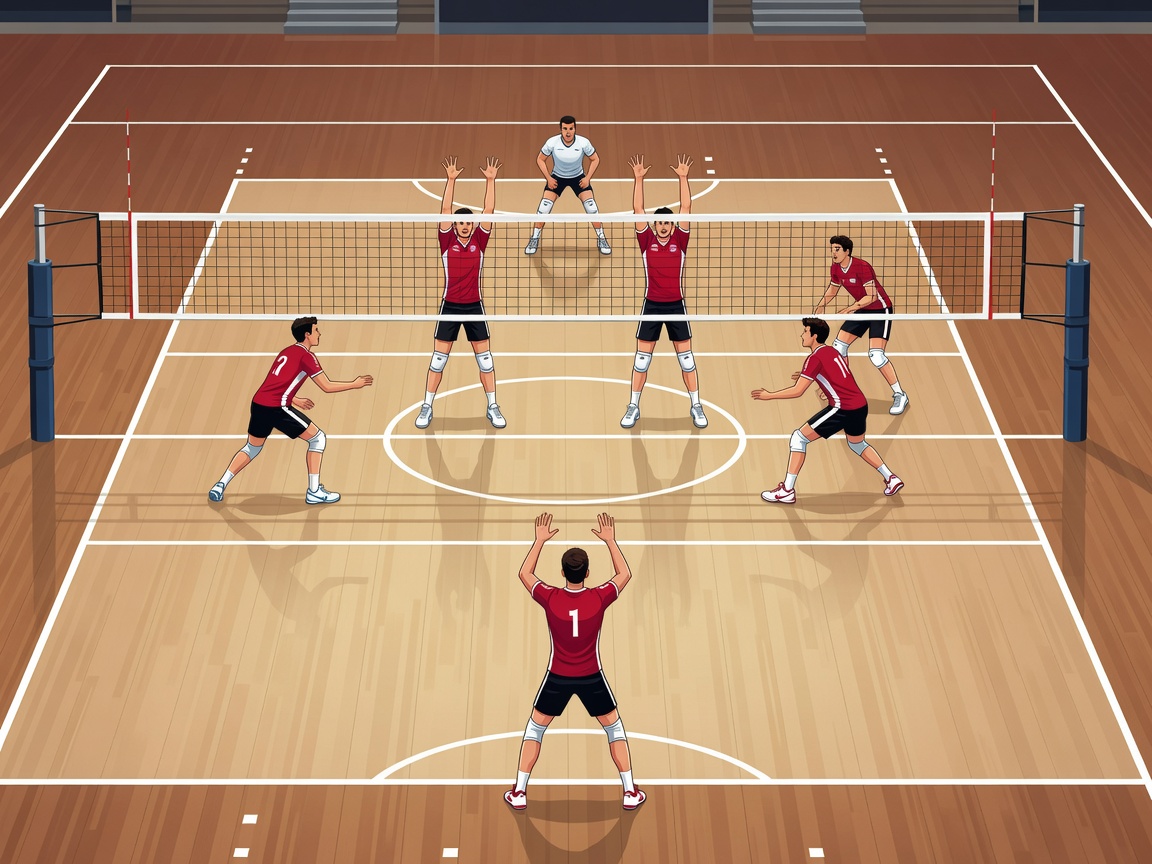
Why is Trentino such a respected name in European club volleyball?
Because respect in this sport is often earned through repeat seriousness rather than endless spectacle. Trentino has long been associated with a model of club competence that travels well across competitions. European relevance has come not just from isolated peaks but from a reputation for coherent teams, sound technical choices and the ability to remain dangerous against varied opponents.
That matters in a continent where styles differ sharply. Clubs from Italy, Poland, Türkiye and elsewhere do not always arrive with the same tactical habits or roster assumptions. A respected club is therefore one that can handle different kinds of matches. Trentino's standing reflects that flexibility. It has often looked like a side with answers rather than merely weapons.
What does a typical Trentino team try to do well?
It usually tries to stay complete. That means good first contact, measured but meaningful service pressure, a setter able to hold the middle in the game, and hitters who are threatening without forcing the entire structure to depend on them. In other words, the club's strongest versions tend to reduce distortion. No single position has to perform miracles every rally because the team is not constantly compensating for an obvious hole elsewhere.
This kind of balance can appear less dramatic than more explosive volleyball, but it is incredibly valuable. Volleyball sets are full of small disruptions: a serve that drifts off the net, a deflection that changes a block assignment, a rally that moves from system to improvisation in two touches. Balanced teams survive those moments better because their geometry does not collapse at the first inconvenience.
How does the Italian setting influence Trentino?
Like Perugia, Trentino operates within SuperLega, so weekly standards are demanding. That tends to sharpen tactical discipline. If a team cannot protect its reception line, opponents will find it. If a middle becomes decorative rather than dangerous, well-drilled blocks will drift wide and sit on the outside hitters. If service pressure is too timid, elite setters will distribute comfortably. Clubs in that environment are repeatedly asked to prove their details.
For Trentino, the benefit is obvious. A club that values structure is given constant opportunities to test whether that structure really holds. Domestic competition becomes a form of quality control. Not perfect control, because sport never works that way, but enough to reveal whether ideas are surviving contact with serious opposition.
What distinguishes Trentino from clubs built around pure star concentration?
The distinction is usually one of emphasis. Star players matter everywhere. No ambitious club ignores top-end talent. But Trentino is often admired for making talent serve the team picture rather than the other way around. The setter's choices, the passing unit, the middle connection and the transition structure remain visible even when standout attackers are present. That makes the club a useful case study in how roster design can favour stability without becoming passive.
There is a trade-off here. A side built more evenly may sometimes look less terrifying at first glance than one packed with obvious power. But even construction can age better over a season, especially in league play and two-leg European ties where opponents have time to target patterns. Trentino's profile suggests the club understands that trade-off and often accepts it deliberately.
Where can Trentino gain an edge against apparently stronger opponents?
In the second and third layers of the rally. If another team has the louder serve or the more imposing opposite, Trentino can still gain ground through cleaner side-out sequences, better emergency choices and stronger block-defence alignment. Elite volleyball is full of matches where the first measure of strength proves incomplete. A side that appears less explosive can still win because it wastes fewer balls and turns awkward possessions into neutral ones rather than lost ones.
That does not mean the club relies on caution. Good structure is not timid. It creates permission to be aggressive at the right times, because players trust the shape around them. When Trentino is convincing, its aggression tends to look informed rather than frantic.
How should a reader place Trentino in the wider European hierarchy?
As one of the model clubs for sustainable elite relevance. That phrase is less glamorous than "dominant" or "unstoppable", but it is more useful. European club volleyball changes quickly. Rosters shift, domestic races harden and continental draws refuse easy narratives. A club that remains consistently respected through those changes has probably built something deeper than a single hot run.
Trentino Volley deserves attention because it shows how top-level status can rest on craft as much as glare. If Zenit Kazan often serves as the historical image of overwhelming completeness, Trentino serves as the image of durable coherence: a club that repeatedly turns good volleyball ideas into teams capable of mattering in Europe.